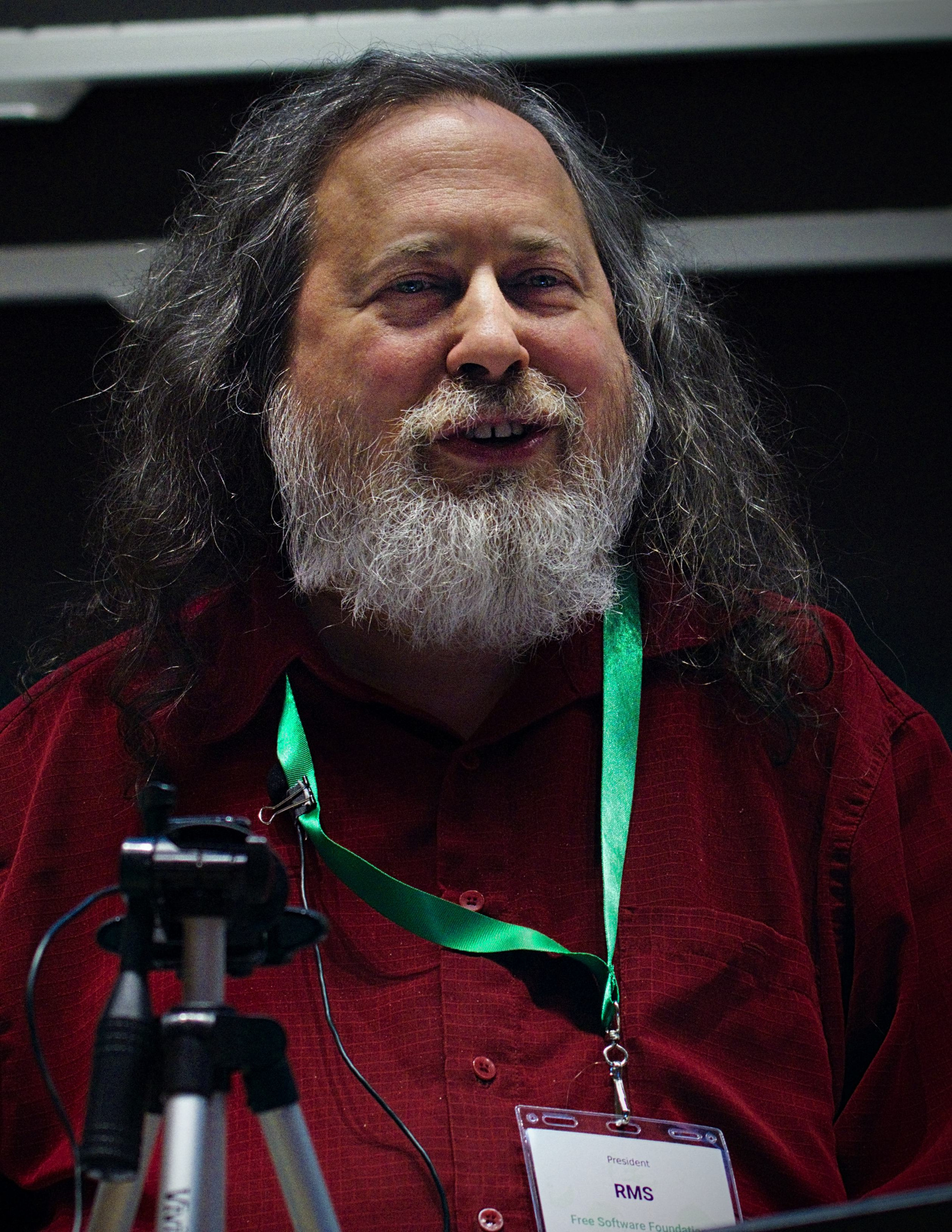
Participantes en el XI Simposio de Software Libre y Código Abierto de la Mixteca, 15 y 16 de Octubre de 2026:


Previo
Expositor 1

Cargando...

Cargando biografía...

Detalles »
Expositor 2

Cargando...

Cargando biografía...

Detalles »
Expositor 3

Cargando...

Cargando biografía...

Detalles »
Siguiente

Convocatoria para exposición de Carteles basados en Software Libre y Código Abierto

Con el objetivo de impulsar la difusión del conocimiento y fortalecer la colaboración entre estudiantes, académicos e investigadores, se dispondrá un espacio para la presentación, en forma resumida e ilustrada, de avances en investigación, innovaciones tecnológicas y desarrollos de software basados en Software Libre y/o Código Abierto.

Temática

Aplicación del Software Libre y/o Código Abierto en las ramas de Sistemas de Cómputo, Seguridad Informática, Desarrollo de Software, Ciencia de datos, Análisis por Elemento Finito, Cómputo de alto rendimiento, Desarrollo de Software Cientı́fico y áreas afines.

Estructura del cartel

El cartel debe cumplir con las siguientes características:

  1. Título.
  2. Autor(es), adscripción y correo
  3. Resumen
  4. Introducción.
  5. Metodología.
  6. Resultados.
  7. Conclusiones.
  8. Referencias.
  9. Agradecimientos a las instancias que financiaron el proyecto, en caso de aplicar.
  10. Especificar licencia de Creative Commons.

Se recomienda incluir imágenes como tablas, fotografías, esquemas y otros gráficos para reforzar el tema expuesto. Estos recursos deben ser de autoría propia; en caso de utilizar materiales de terceros, se debe citar la fuente en el formato IEEE.

Especificaciones del cartel

El cartel debe medir 110 cm de alto por 90 cm de ancho. El material para la impresión queda a elección de los participantes, es importante cuidar la calidad de imágenes y texto.

Fechas importantes

  • Fecha de inicio de recepción de trabajos: 18 de junio de 2026.
  • Fecha límite para la recepción de trabajos: 03 de agosto de 2026.
  • Notificación de trabajos aceptados: 03 de septiembre de 2026.
  • Presentación de trabajos: 15 al 16 de octubre de 2026.
  • Debe ser enviado a través de la plataforma en https://simposio.utm.mx/carteles, a partir del 15 de junio.

Comité Revisor

  • Dr. Tomás Pérez Becerra
  • Dr. Ignacio Arroyo Fernández
  • Dr. Miguel Alberto Domínguez Gurría
  • Dr. Christian Eduardo Millán
  • Dr. Eduardo Sánchez Soto
  • Dr. Oscar David Ramírez Cardenas
  • Dr. Juan Montes Pérez
  • Dr. Ulises Ramírez Meza
  • Dr. Virgilio Vázquez Hipólito

Comité Organizador

  • M.C. Everth Haydeé Rocha Trejo
  • I.C Wendy Yaneth García Martínez
  • Lic. Ma. Esperanza Pérez Cordoba Sánchez
  • M.C. Graciela Castro González
  • M.R.C. Mónica Edith García García
  • M.C. Gabriel Gerónimo Castillo
  • I.C. David Martínez Torres
  • M.C. Gerardo Cruz González
  • M.T.C.A. Moisés Emmanuel Ramírez Guzmán

Enhancing spatial safety: Better array-bounds checking in C and the Linux kernel

Gustavo A. R. Silva

06 de Mayo de 2026, 12:00 hrs / Auditorio de la UTM

The C language has historically suffered from a lack of proper bounds-checking on all types of arrays. The Linux Kernel Self-Protection Project has been addressing this issue for several years. In this presentation, we’ll learn about the most recent hardening efforts to resolve the problem of bounds-checking, particularly for fixed-size and flexible arrays.

We’ll explore the different mechanisms being used to harden key APIs like memcpy() against buffer overflows, which include the use of some interesting built-in compiler functions. We’ll also talk about a couple of recent compiler options like -fstrict-flex-arrays and -Wflex-array-member-not-at-counted_by attribute introduced in Clang 18 and GCC 15, which helps us gain run-time bounds-checking coverage on flexible arrays.

Overall, we’ll discuss how various challenges have been overcome, and highlight the innovations developed to solve the problem of array boundschecking in both C and the upstream Linux kernel once and for all.

Sobre el ponente:

Gustavo A. R. Silva works full-time as an Upstream Linux Kernel Engineer focused on hardening and proactive security. He has spent the past several years fixing all sorts of bugs and hardening the Linux kernel. His work is supported by The Linux Foundation and the Alpha-Omega project.

He’s a member of the Linux Kernel Self-Protection Project, and a regular speaker at Kernel Recipes and Open Source Summit. He has also presented at Linux Security Summit, Lund LinuxCon, Linux Plumbers Conference, Everything Open, The University of Adelaide, and Symposium sur la Sécurité des Technologies de l’Information et des Communications (SSTIC) as an invited speaker.